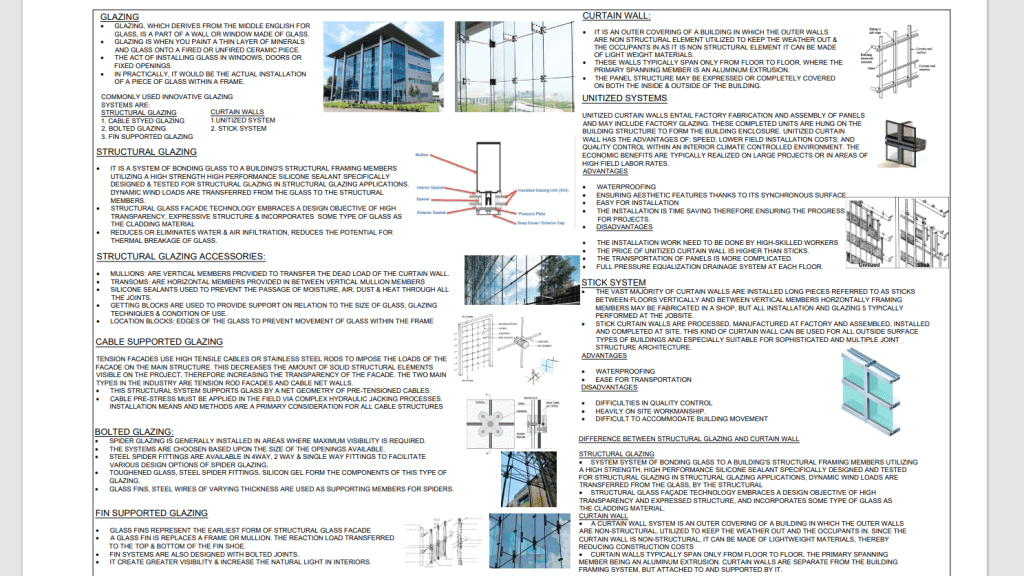
Structural Glazing and curtain wall
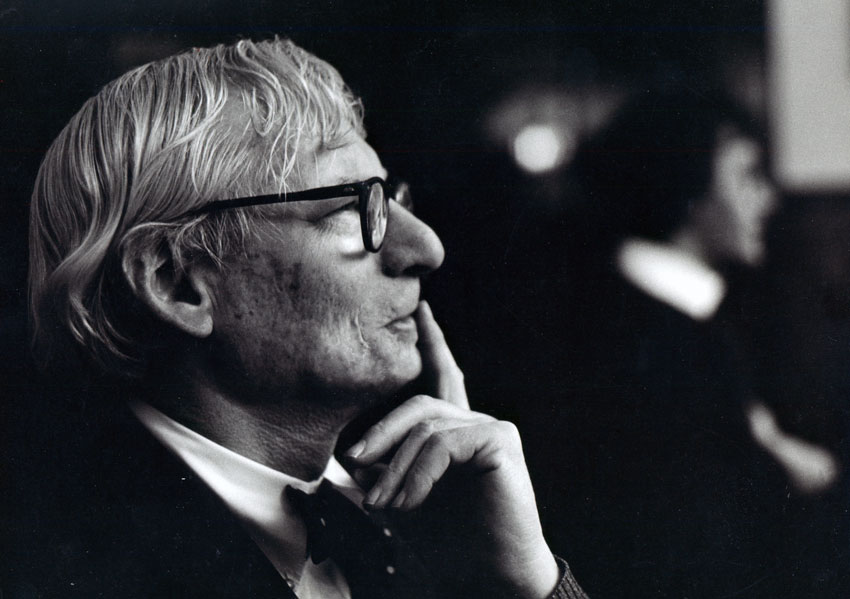
Louis Isadore Kahn (born Itze-Leib Schmuilowsky; March 5 [O.S. February 20] 1901 – March 17, 1974) was an Estonian-born American architect based in Philadelphia. After working in various capacities for several firms in Philadelphia, he founded his own atelier in 1935. While continuing his private practice, he served as a design critic and professor of architecture at Yale School of Architecture from 1947 to 1957. From 1957 until his death, he was a professor of architecture at the School of Design at the University of Pennsylvania.
Kahn created a style that was monumental and monolithic; his heavy buildings for the most part do not hide their weight, their materials, or the way they are assembled. Famous for his meticulously built works, his provocative proposals that remained unbuilt, and his teaching, Kahn was one of the most influential architects of the twentieth century. He was awarded the AIA Gold Medal and the RIBA Gold Medal. At the time of his death he was considered by some as “America’s foremost living architect.”
IIM Ahemdabad
While Louis Kahn was designing the National Assembly Building in Bangladesh in 1962, he was approached by an admiring Indian architect, Balkrishna Doshi, to design the 60 acre campus for the Indian Institute of Management in Ahmedabad, India. Much like his project in Bangladesh, he was faced with a culture enamored in tradition, as well as an arid desert climate.
For Kahn, the design of the institute was more than just efficient spatial planning of the classrooms; he began to question the design of the educational infrastructure where the classroom was just the first phase of learning for the students.
The large facade omissions are abstracted patterns found within the Indian culture that were positioned to act as light wells and a natural cooling system protecting the interior from India’s harsh desert climate. Even though the porous, geometric façade acts as filters for sunlight and ventilation, the porosity allowed for the creation of new spaces of gathering for the students and faculty to come together.


I spend more and more time at my desk these days, doing everything from preparing the family taxes to working on this blog. Because of this, my workspace is constantly changing. Holding the clutter at bay is challenging, so I prefer to keep nearby only a few quality items that serve multiple purposes over a stockpile of things I might never need.
My planner is one of those simple ring binder journals you can pick up from any stationery supplies store. White paper. No ruled lines to cage my venturesome handwriting and doodling. I’m an obsessive note-taker and fill pages to the margins with to do lists, rough sketches, and ideas for blog posts. I usually go through one planner every month.
Who me? Organized? My husband might tell you otherwise, but I do find it hard to keep track of our weekly schedule. You know: school, swimming, grocery shopping, tidying up, paying bills, remembering appointments and so on. Fortunately, in our house we all pitch in. No one person does everything. But we do have a little secret that helps our day run more smoothly.
There are millions of tips out there on how to fly with kids, what to bring on camping vacations, which suitcase to buy, where to go and what to see in just about every corner on Earth. What I want to share today is something a little different – something that we discovered last summer during a family hike in the Appalachians.




 Bhargavi N