Category Archives: Biomimicry

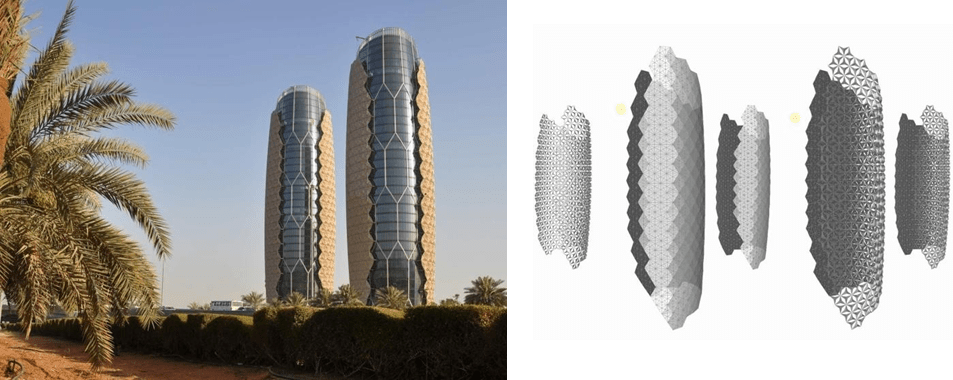
Responsive Facade, Al Bahar Towers

NAME OF THE BUILDING-Al Bahar Towers , Abu Dhabi

TYPE OF FACADE-Responsive Facade

MATERIAL USED-Fiberglass and tinted glass
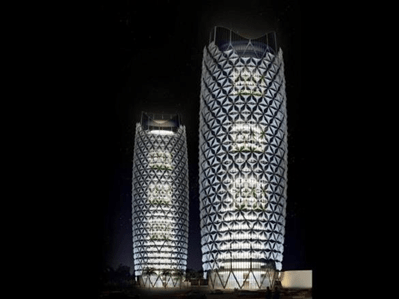
WORKING MECHANISM-The screen operates as a curtain wall, sitting two  meters outside the buildings’ exterior on an  independent frame. Each triangle is coated with  fiberglass and programmed to respond to the  movement of the sun as a way to reduce solar gain  and glare. In the evening, all the screens will close.

At night they will all fold, so they will all close,  so you’ll see more of the facade. As the sun rises in  the morning in the east, the mashrabiya along the  east of the building will all begin to close and as the  sun moves round the building, then that whole  vertical strip of mashrabiya will move with the sun.

[ For Abu Dhabi’s newest pair of towers, Aedas  architects have designed a responsive facade which takes  cultural cues from the “mashrabiya”, a traditional Islamic  lattice shading device.]
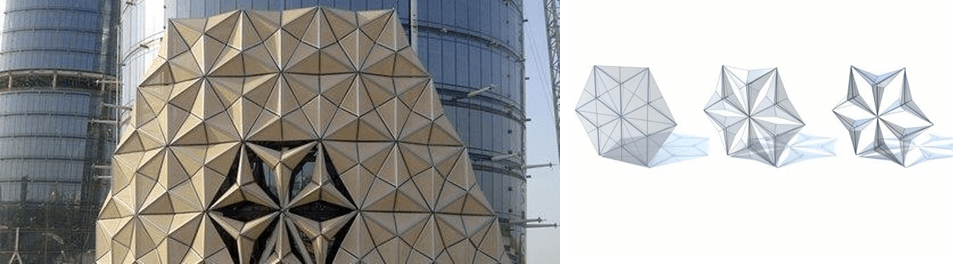
CHARACTERSTICS OF FACADE-The facade on Al Bahar , computer-controlled to respond  to optimal solar and light conditions, has never been  achieved on this scale before. In addition, the expression of  this outer skin seems to firmly root the building in its  cultural context
Lavasa Township Pune


• Location – It is located in the Western Ghats, on the
banks of the Baji Pasalkar Reservoir behind the
Varasgaon Dam (Varasgaon Dam & Reservoir) near
Pune and Mumbai.

How the unfinished city of Lavasa became a nightmare for Indian banks |  Business Standard News


• Materials used- Green roofs that’s prevent soil
erosion, and polymer product that stiffens soil .
• Area statement-total- 40 sq mil
Elevation-630m[2,070 ft]
• Level of Biomimicry-Ecosystem Level
• Part of biomimicry used-City rooftops mimic the banyan fig leaf looking to its drip-tip system that allows water to run off while
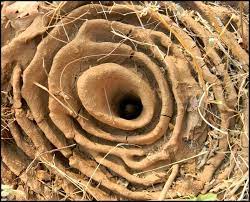
simultaneously cleaning its surface. To control water over-flow from run-off during the rainy season, HOK mimicked native harvester
ant nests. The ants construct radiating grooved earth dams around the central nest hole to redirect water away in multiple
directions. This successful ant engineering was mimicked in the design Lavasa’s drainage system for the master site plan.

4,135 Banyan Tree Leaf Stock Photos and Images - 123RF
Banyan fig leaf


• Design concept-It relies heavily on sustainability principles of energy conservation, reduction in demand of virgin resources and
waste diversion. It configured the landuse distribution in such a way that the concepts like ‘walk to work’, ‘walk to school’ and ‘ walk
to park’ becomes reality.
• Impact on environment-There is no waste and use of only recyclable materials as that is how the nature and ecosystem was
designed. It has developed an overall master plan for the town with included landscape plans to minimize deforestation.
• Inference-It is based on the principle of new urbanism. It gives nature its chance to teach sustainable human settlement through
biomimicry.

Harvester
ant nests


02-BUILDINGS INSPIRED ON BIOMIMICRY PRINCIPLES

EIFFEL TOWER

LOCATION

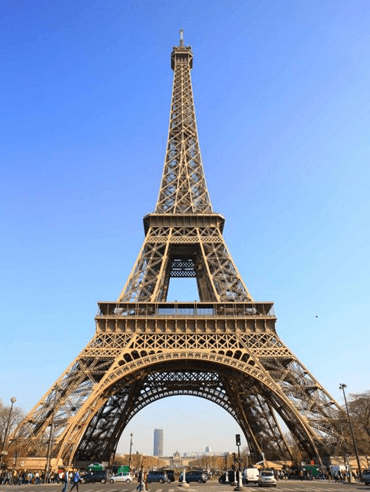
The Eiffel Tower is a landmark and an early example of wrought-iron construction on a gigantic scale in Paris,France .

DESIGNED BY-   It was designed and built by the French civil engineer Gustave Alexandre Eiffel for the Paris World’s fair of 1889.

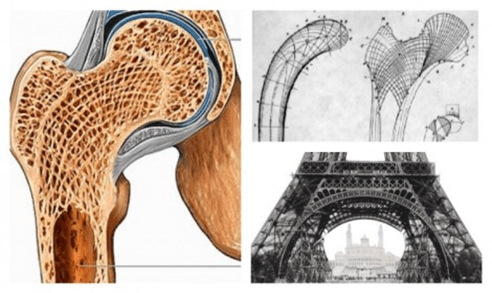
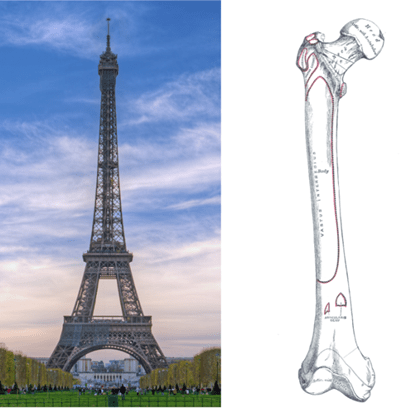
 INSPIRED BY -Eiffel Tower is inspired by  Bamboo and bone as they are both natural Nano-engineered materials that use structural hierarchy to achieve their lightness and strength. The Eiffel Tower uses a similar idea. Eiffel  borrowed this notion from bamboo and bone, and put it to use on a colossal scale.

CONCEPT- The Eiffel tower is incredibly well optimized to do what it was designed to do, to stand tall and stand strong, while using a minimum of material.

The Eiffel tower was built with a  structure similar to that of the Thigh bone head. Tower was able to build the longest structure that was built in that period, with high strength and flexibility, using less steel material.

Eiffel tower’s beauty had to do with economy and structural efficiency, with achieving the greatest strength with the east possible material.

BUILDINGS INSPIRED ON BIOMIMICRY PRINCIPLES

EASTGATE CENTRE

LOCATION

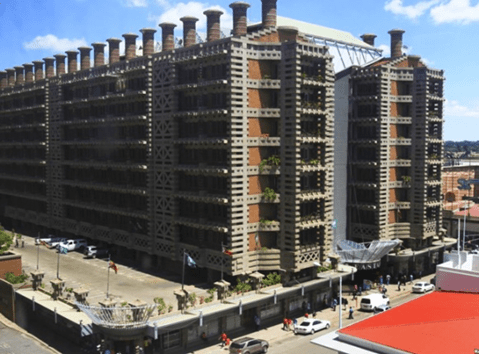
The Eastgate Centre designed by architect Mick Pearce in conjunction with engineers at Arup Associates is a large office and shopping complex In Harare, Zimbabwe.”

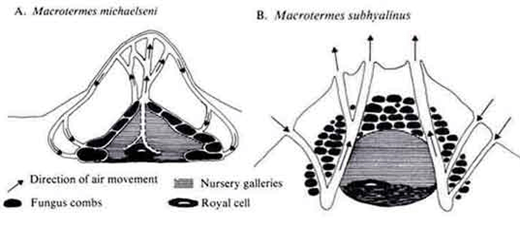
INSPIRED BY: Inspired by the way the insects use very limited resources to create ventilated mounds, permeating them with holes over the surface, Pearce set out to construct a building also peppered with holes all over the building’s “skin

CONCEPT- Self-cooling mounds of African termites

                  The building has no air-conditioning or heating but regulates its temperature with a passive cooling system inspired by the self-cooling mounds of African termites. The structure, however, does not look like a termite mound to function like one and instead aesthetically draws from indigenous Zimbabwean masonry.

The Eastgate, center , largely made of concrete, has a ventilation system which operates in a similar way. Outside air that is drawn in is either which is hotter, the building concrete or the air. It is then vented into the building’s floors and offices before exiting via chimneys at the top. The complex also consists of two buildings side by side that are separated by an open space that is covered by glass and open to the local breezes.